How to Buy Land in Florida
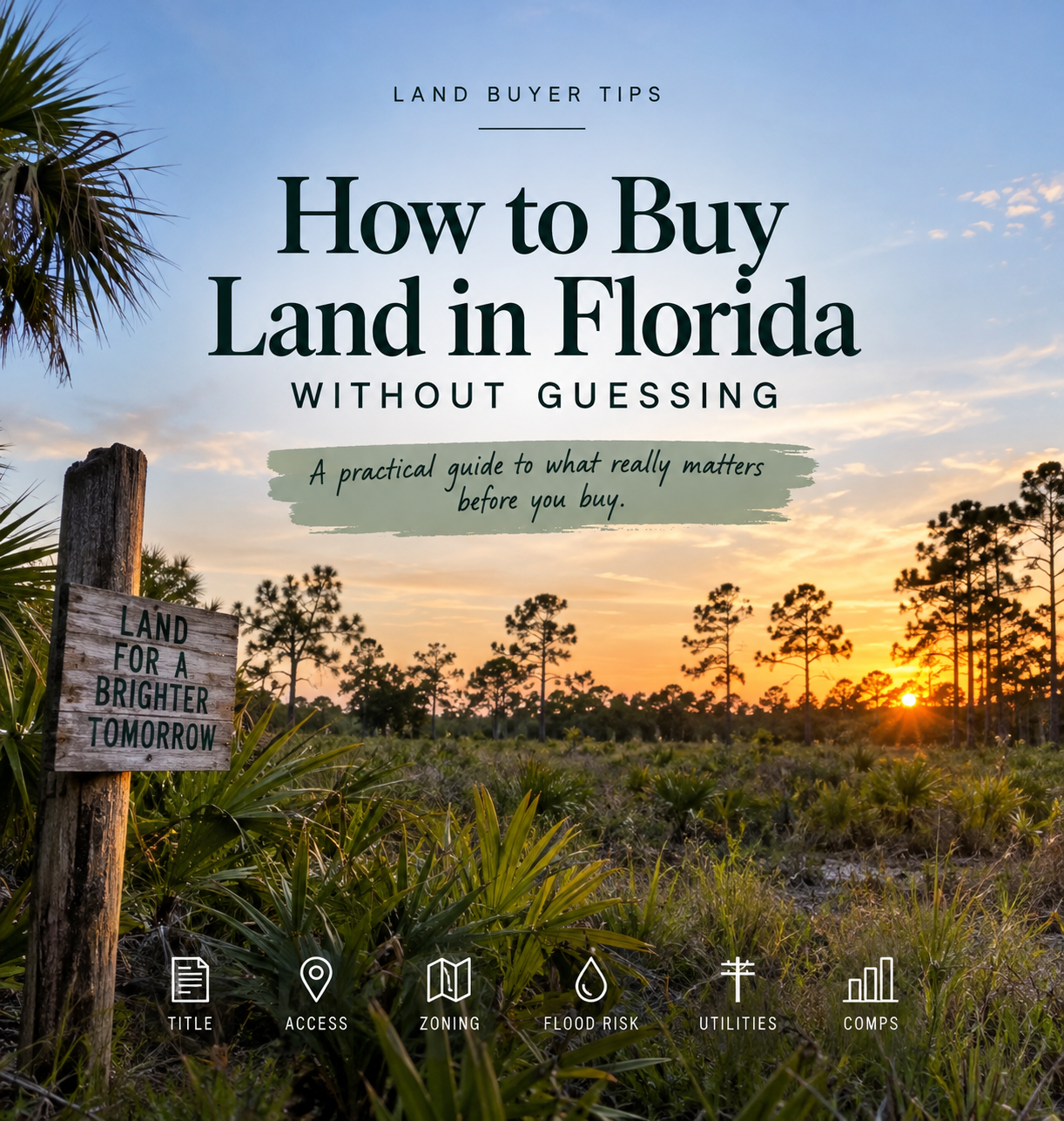
Buying land looks simple from the outside.
Find a lot. Agree on a price. Sign some papers. Congrats, you own dirt.
And sometimes it really is that easy.
But cheap land can get expensive fast if you find out after closing that the road isn’t what you thought, your intended use isn’t allowed, half the property may be wetlands, or the parcel on the map isn’t exactly what the deed describes.
If this is your first time shopping for dirt, you may also want to start with our [[Guide to Buying Your First Piece of Florida Land]].
We buy vacant land ourselves at Paradise Parcels, so this is pretty close to the checklist we use before we put our own money into a property.
Start with the parcel, not the listing
A Facebook ad or Zillow listing is a starting point. It isn’t due diligence.
The first thing we want is the parcel number, usually called an APN or parcel ID.
From there, we can figure out which county owns the records, whether the land sits inside a city or in unincorporated county territory, who the county says owns it, and which deed and legal description we should be looking at.
That city-versus-county question matters more than people realize. Two lots with the same mailing city can sometimes have completely different zoning rules because one is inside city limits and the other is not.
And if your main question is whether you can camp or stay in an RV, don't rely on a generic Florida answer.
1. Ownership and title
We start with the county Property Appraiser and Clerk/Official Records.
The Property Appraiser helps us identify the parcel and current assessed owner. Then we look through recorded documents for the deed history and anything else that may affect the property.
That can include mortgages, liens, easements, restrictions, judgments, probate documents and other recorded instruments.
Sometimes a title history contains something that looks a little scary at first glance, like a tax deed.
That doesn't automatically mean the property is bad, but it deserves a closer look.
Depending on how the chain of title looks, we either feel comfortable to self close, or we will close though a title company. And when you buy a property from us, you have the same options.
2. The legal description
A street name is not a legal description.
Neither is the little parcel outline you see on Google Maps.
We compare the legal description in the deed with the county parcel record and, when the property is in a recorded subdivision, the plat.
For a typical platted Florida lot, that description may look something like Lot 12, Block 4, followed by the subdivision name and plat book information.
We want the paperwork to consistently point to the same dirt.
Sounds basic. Still worth checking every time.
3. Access
Next question: can you actually get to it?
We look at both physical access and legal access.
A dirt trail through the trees does not automatically mean you have a legal right to use it. And a road shown on a plat does not automatically tell you what condition that road is in today or who maintains it.
Depending on the property, we may check road frontage, recorded easements, subdivision plats, county road records and what the access looks like on current aerial imagery.
If access is unclear, that's something we want figured out before buying, not after.
4. Zoning and what the land can actually be used for
This is where internet advice gets messy.
Someone says, “Florida lets you live in an RV on your own property.”
Someone else says, “Just buy anything zoned residential.”
Neither statement is good enough.
We identify the exact jurisdiction first. Then we check the parcel's current zoning, applicable land-development code and, where relevant, future land use, overlays or subdivision restrictions.
A zoning category that allows a house does not necessarily allow a manufactured home.
A county that permits temporary RV use may still limit the number of days, require a permit or require sanitation.
And “residential” definitely does not automatically mean “do whatever residential thing I have in mind.”
If RV living is something that you are interested in, check out our post about where you can legally do so.
https://www.paradiseparcels.com/the-dirt/where-can-i-live-in-an-rv-in-florida
5. Flood zones and wetlands
Florida. Water. These two know each other pretty well.
We check FEMA flood information for the parcel.
But flood zone and wetlands are two different questions.
A colored layer on an online wetland map is useful screening information. It isn't the same thing as a field delineation or formal determination.
We dig into this much further in Flood Zones and Wetlands in Florida: What Land Buyers Need to Know Before Purchasing.
Tiny differences here can matter, especially on smaller residential lots.
6. Utilities
“Utilities nearby” might be our least-favorite vague phrase in land listings.
Nearby where?
Across the street? Half a mile away? Available for connection? Or somebody just saw a power pole on Google Street View?
We try to separate what we know from what we don't.
For electricity, water and sewer, we identify the actual provider and check availability when it matters.
If the parcel would use a well and septic system, that is its own due-diligence question.
And no, a vacant parcel isn't automatically “septic approved” because the house next door has one.
If you're new to rural utilities, our Why Many Florida Vacant Lots Require a Well and Septic System guide explains how that side of land ownership works.
7. Recent sold lots
Then comes price.
Not “what are people asking?”
What actually sold?
We compare similar vacant parcels as close as possible in location, size, access, zoning and general characteristics.
A quarter-acre paved-road lot and a quarter-acre lot down an unimproved road may be the same size and still be very different comps.
We also pay attention to dates. A sale from three years ago during a different market is less useful than several genuinely comparable recent sales.
8. County-specific weird stuff
This category doesn't have a fancy name.
Every county has its quirks.
Maybe it's an unusual subdivision. An old plat. Private roads. Minimum lot-size rules. A drainage issue. A special overlay. A tax deed in the title history. Or an area where tiny parcels were platted decades ago but modern development rules now deserve a closer look.
Putnam is a good example. If you're looking around Interlachen or Satsuma, read This is why our due diligence changes a little from county to county.
So… how do you safely buy land in Florida?
Slow down just enough to answer the boring questions.
Who owns it?
What exactly are you buying?
Can you legally get to it?
What can you actually do there?
What do the flood and environmental records show?
How would you handle water, wastewater and power?
What have comparable lots really sold for?
And does the title history make sense?
Then there's the money side.
If paying cash isn't the right fit, [[Owner Financing Explained]] walks through what seller financing actually means, what numbers matter, and which questions we'd ask before signing anything.
You don't need to become a surveyor, zoning attorney and wetland scientist before buying a little piece of Florida.
You just need to know which questions deserve an answer.
That's what we try to do with every property we buy and every property we sell.
Ready to see what we have available? Browse our Current Inventory.
And if you see something you're unsure about, ask us. We'd rather answer the weird question before you buy.
FAQ
Best Websites to Find Owner-Financed Land in Florida — 2026 Comparison
Flood Zones and Wetlands in Florida: What Land Buyers Need to Know Before Purchasing