
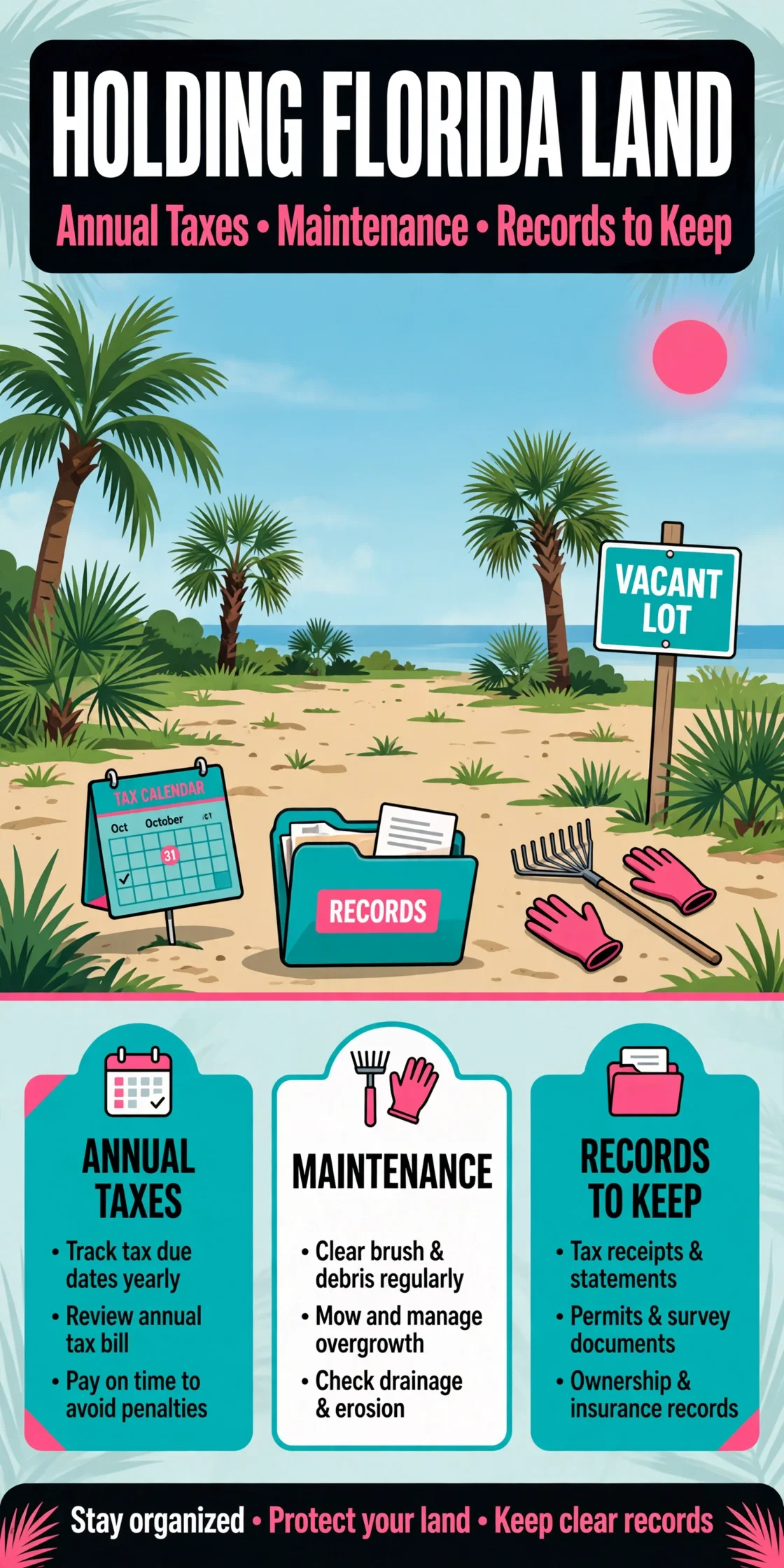
Buying a Florida lot is not the end of the cost. Holding it has three yearly jobs:
Pay the property taxes on time.
Keep the lot in decent shape, and check on it.
Keep the paperwork that proves what you own, what you paid, and what you agreed to.
None of these jobs is complicated on its own. They cause trouble when they are forgotten for a year or two. A small tax bill left unpaid, a lot left to overgrow, or a payoff letter lost in a move can each turn into a much bigger problem later.
Annual property taxes: the Florida calendar
Florida property taxes follow a yearly calendar. Bills are mailed around November 1. Paying early earns a discount, and waiting too long makes the bill delinquent.
The early-payment discounts, set by Florida Statute 197.162, are:
November: 4% off
December: 3% off
January: 2% off
February: 1% off
March: no discount, full amount due
Taxes become delinquent on April 1. After that, penalties and interest apply, and unpaid taxes can lead to a tax certificate sale. That does not mean you lose the lot on April 2, but it is the point where a small bill starts to get expensive and complicated. Pay in November if you can — on a small lot tax bill, 4% is still money back for doing nothing but paying early.
How much will your taxes be? It varies by parcel, by county, and by assessed value. As one example only, a Lake Placid lot page in our earlier research gave approximately $250 per year. That is not a promise for any other lot. Check the county property appraiser and tax collector for the specific parcel, and expect the number to change over time as values and rates change. Tax amounts can also vary wildly from year to year.
One question to settle in writing, before you assume anything: if you bought with owner financing, who pays the taxes while you are still paying off the lot, and are taxes included in your monthly payment or paid separately? Do not assume. Read your written financing terms, and ask the seller if it is not clear. The same question applies to any HOA dues, special-district charges, or assessments on the lot. If you are financing the lot from us, we will hold the prorated taxes in escrow and pay them on your behalf, unless otherwise specified.
What "maintenance" means for a vacant lot
A vacant lot does not need a lawn service every week, but it does need attention. Florida grows fast, and neighbors and code enforcement notice when a lot is ignored.
Plan for these, at least once or twice a year:
Clearing and mowing. Cut back overgrowth so the lot does not become a dumping spot or a fire and pest problem, and so the lot lines stay visible. If you live far away, find a local person or service you trust, and keep their receipts. If the lot is not clear, you will likely not need to worry about this at all.
Dumping and debris. Check for dumped tires, appliances, or construction debris. If you find it, report it to the county and keep a record of the report. Do not assume someone else will clean it up. If it is on your property, it is your responsibility.
Trees and drainage. Look for dead trees near a road or a neighbor's lot, and for standing water or drainage changes after heavy rain. You do not need to fix every wet spot, but you will want to know about it before you build.
HOA and district rules. If the lot is in an HOA, a community development district, or a special taxing district, keep up with dues, notices, and any rules about clearing, fences, or signs.
If you are holding the lot with owner financing, remember the other rule that applies during financing: you cannot live on or develop the land until it is paid in full. Maintenance and clearing to keep the lot in shape is not the same as building on it. When in doubt, ask before you put up a structure, a fence, or anything permanent.
Records to keep: the folder that saves you later
Keep one folder, paper, digital, or both, for each lot you own. We personally have both a filing cabinet as well as digital copy. If you ever sell the lot, refinance it, pay it off, or answer a county question, this folder is what you will reach for. The county does hold on to the recorded copies too, but its always a good idea to have your own copy.
Keep these, at minimum:
Deed and closing paperwork. The recorded deed, the closing statement, and any title paperwork from the purchase.
Financing paperwork. Your written financing agreement, every payment receipt or statement, and, when you pay it off, the payoff letter and deed-transfer paperwork. Do not throw these away after payoff — they prove the lot is yours free of the financing agreement.
Tax bills and receipts. Every year's tax bill and proof of payment, including any discount you received for paying early.
Survey and maps. Any survey, plat, county GIS printout, or site plan for the lot, with the date you got it.
Permits and county letters. Any zoning letter, permit, septic or well paperwork, and any letter from the county, HOA, or district about the lot.
HOA and district documents. Covenants, rules, dues notices, and payment receipts, if they apply to the lot.
Photos with dates. Dated photos of the lot when you bought it, after clearing, and before you build. Photos can help settle "was that fence already there?" questions later.
Correspondence. Emails or letters with the seller, the county, the HOA, or a contractor about the lot. Keep the important ones, not every marketing email.
Keep the folder at least through payoff and through any later sale, and ask a tax or title professional how long to keep it after that. A backup copy in a second place, a cloud folder, a safe deposit box, or a trusted family member's files. This is worth the ten minutes it takes.
A simple yearly routine
Put these on your calendar once a year, and holding land stays boring in the best way:
November: Pay the tax bill and take the 4% early-payment discount if you can.
Once or twice a year: Visit the lot, or have someone you trust visit it. Photograph it, check overgrowth, and check markers, access, and dumping.
When anything changes: Update the folder. New tax bill, new HOA notice, new payment, new survey — file it the week it arrives, not the year after.
Before you build: Pull the survey, the zoning, and the permit requirements together, and confirm them with the county. Do not start from a map screenshot.
The bottom line
Holding Florida land is mostly about not forgetting the small things: pay the taxes early, check the lot, and keep the paperwork.
The purchase price is the headline. The taxes, the clearing, the dues if any, and the records are the part that keeps that purchase clean, sellable, and ready to build on when the time comes.
FAQ
How much are property taxes on a Florida lot?
It varies by parcel and county. One Lake Placid example from our research was approximately $250 per year, but that is not a promise for any other lot. Right now, we have lots with almost $1,000 in annual property taxes. Check the county property appraiser and tax collector for the specific parcel.
When are Florida property taxes due?
Bills are mailed around November 1. You get a discount for paying in November (4%), December (3%), January (2%), or February (1%). March is full price, and taxes become delinquent on April 1.
What happens if I miss a tax payment?
Penalties and interest apply after April 1, and unpaid taxes can lead to a tax certificate sale. It does not mean you lose the lot immediately, but do not let it sit — contact the county tax collector as soon as you can.
Do I need to maintain a vacant lot?
Yes, in practical terms. Plan for clearing and mowing, checking for dumping, keeping markers visible, and following any HOA or district rules that apply to that lot.
What records should I keep?
Deed and closing paperwork, financing agreement and payoff letter, tax bills and receipts, survey and maps, permits and county letters, HOA/district documents, dated photos, and important correspondence about the lot.
If I am still financing the lot, who pays the taxes?
Check your written financing terms. Do not assume taxes are included in your monthly payment or paid separately until you have read the agreement or asked the seller.
Does holding a lot mean I can build on it?
No, not by itself. Building still needs county approval, and with owner financing at Paradise Parcels, you cannot live on or develop the land until it is paid in full.